Ralph Lauren: Accessibility as a Design Driver and Process Framework
Design System Design, Accesibility
2025
UX/UI Designer
Context
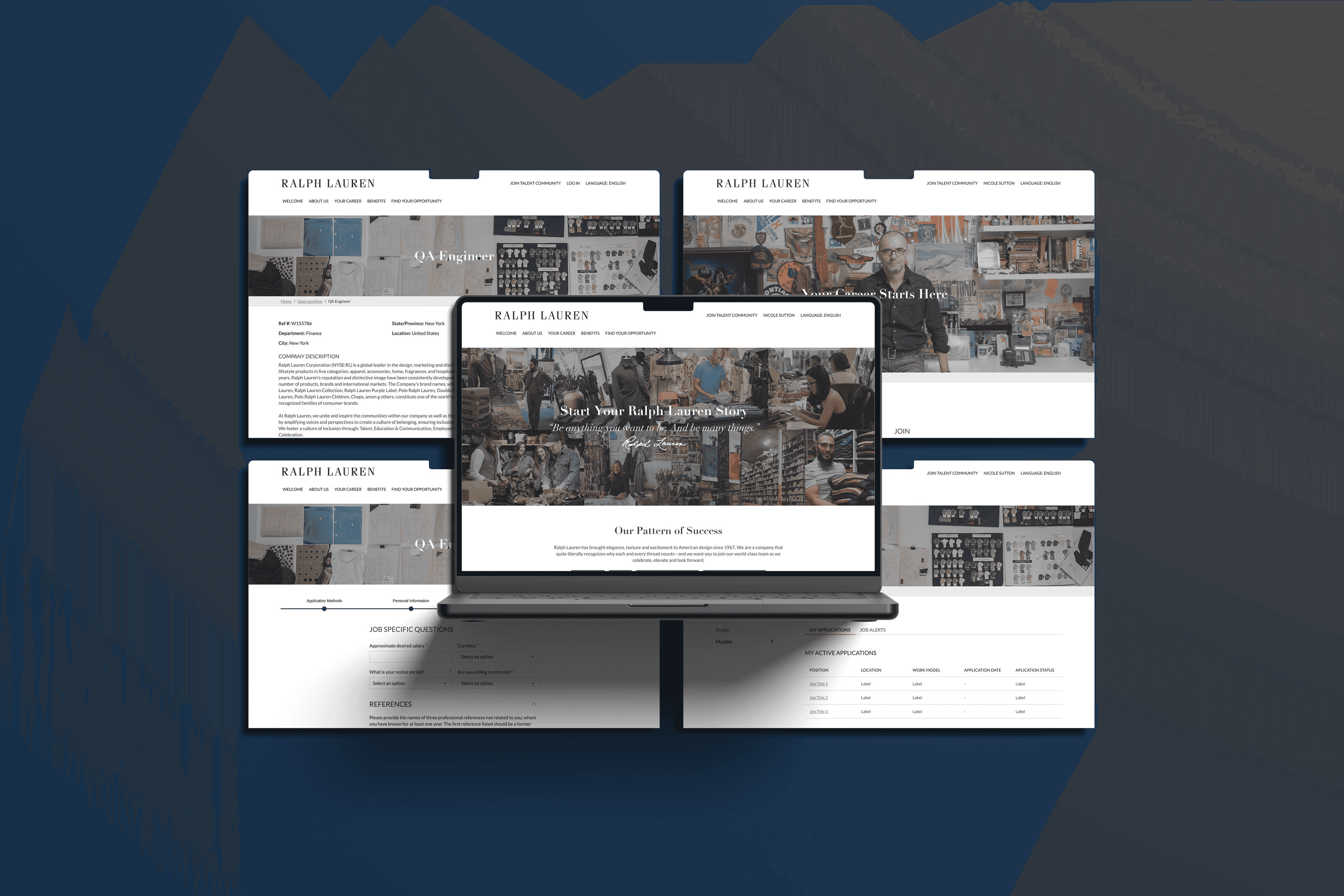
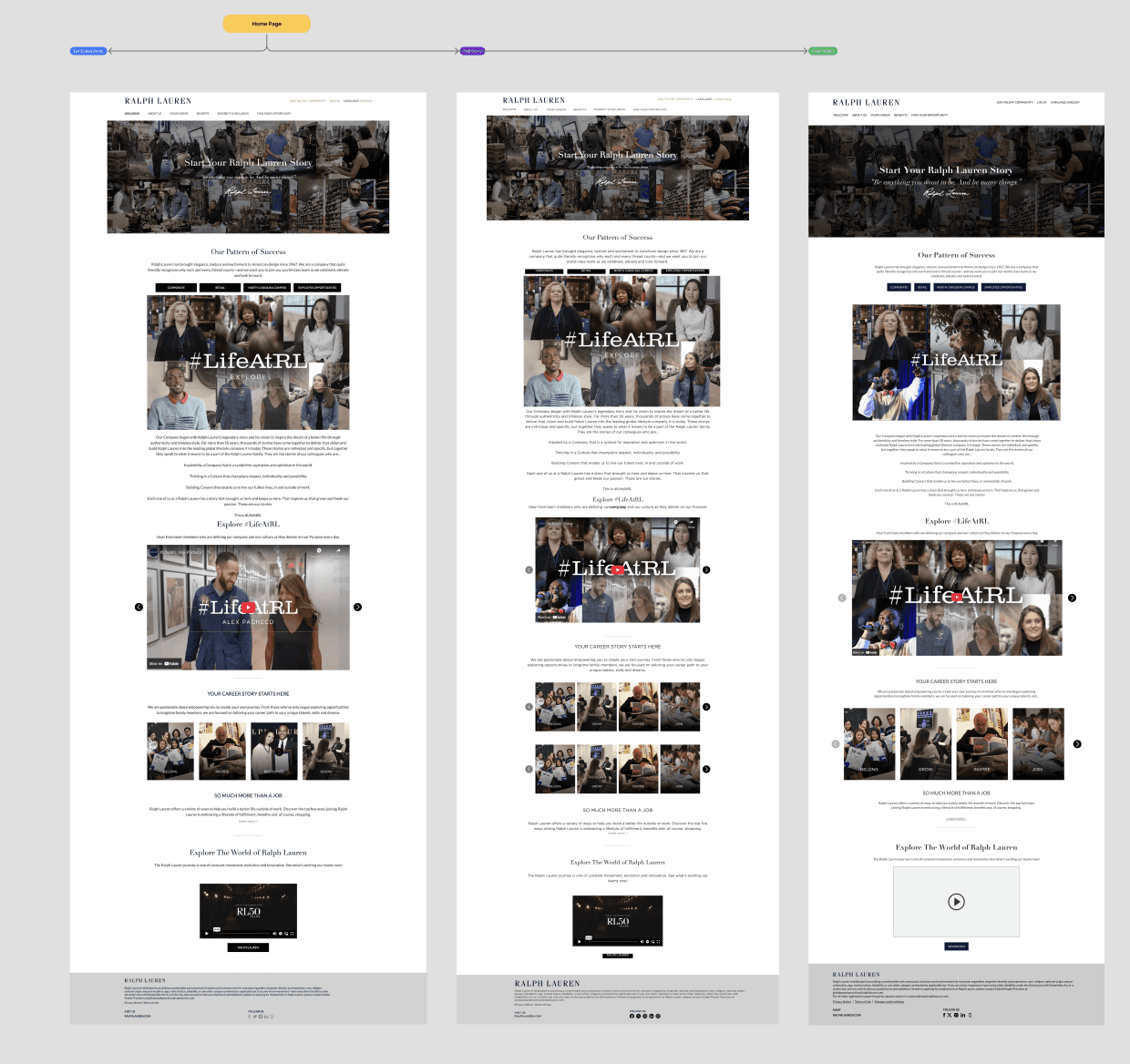
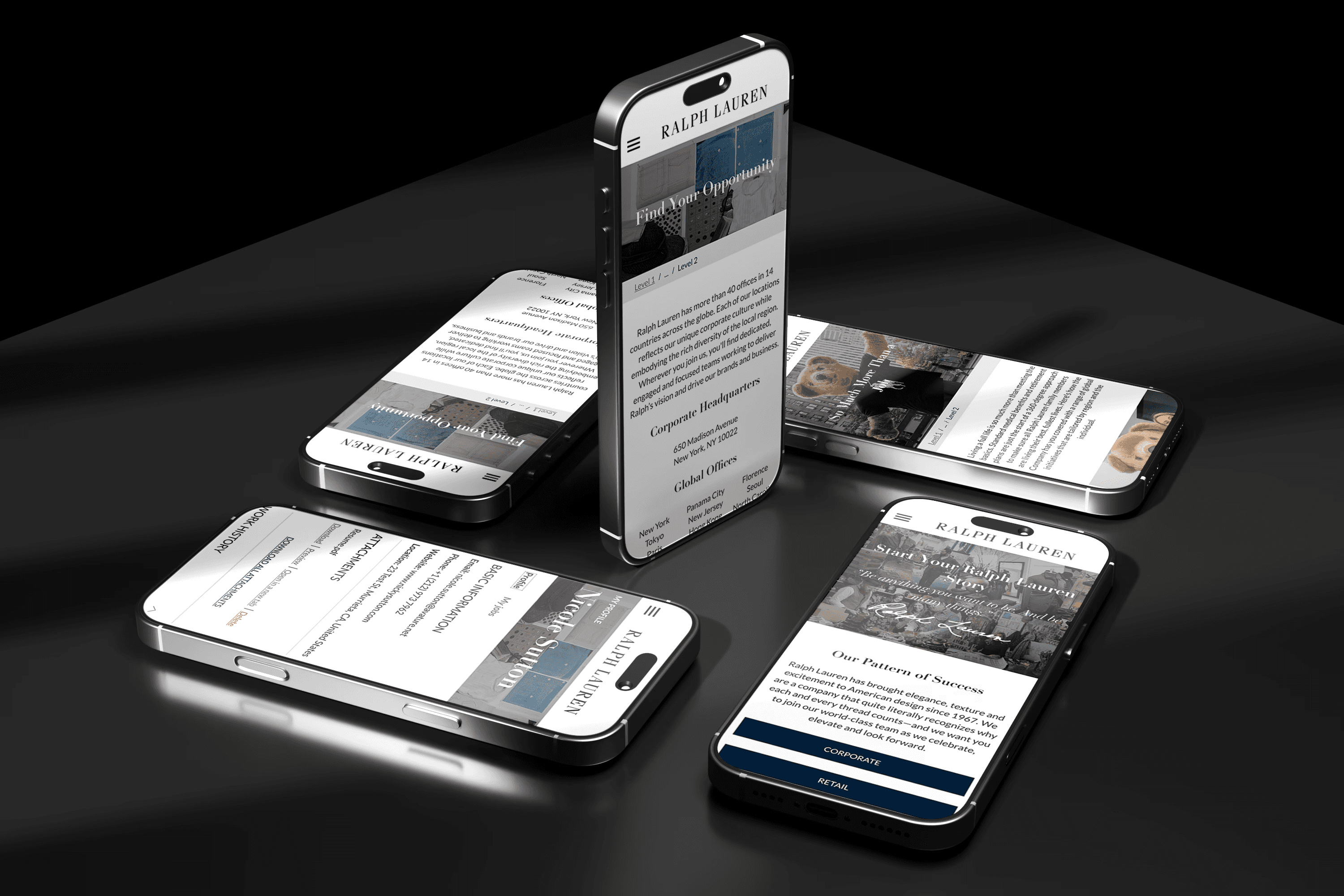
The project involved a full revamp of Ralph Lauren’s external Careers Portal, structured in two main phases: an internal feasibility stage and a client-facing stage.
The central challenge was not only redesigning the interface, but determining how the platform could be rebuilt in a way that was technically feasible, scalable, and compliant with strict accessibility (A11y) standards.
Accessibility was not a secondary requirement: the client had engaged a specialized external vendor to validate compliance, making accessibility a core design and technical constraint from the start.
Key Learning Point
A key challenge was acting as a bridge between:
the accessibility validation vendor,
the client stakeholders,
and the internal design and development teams.
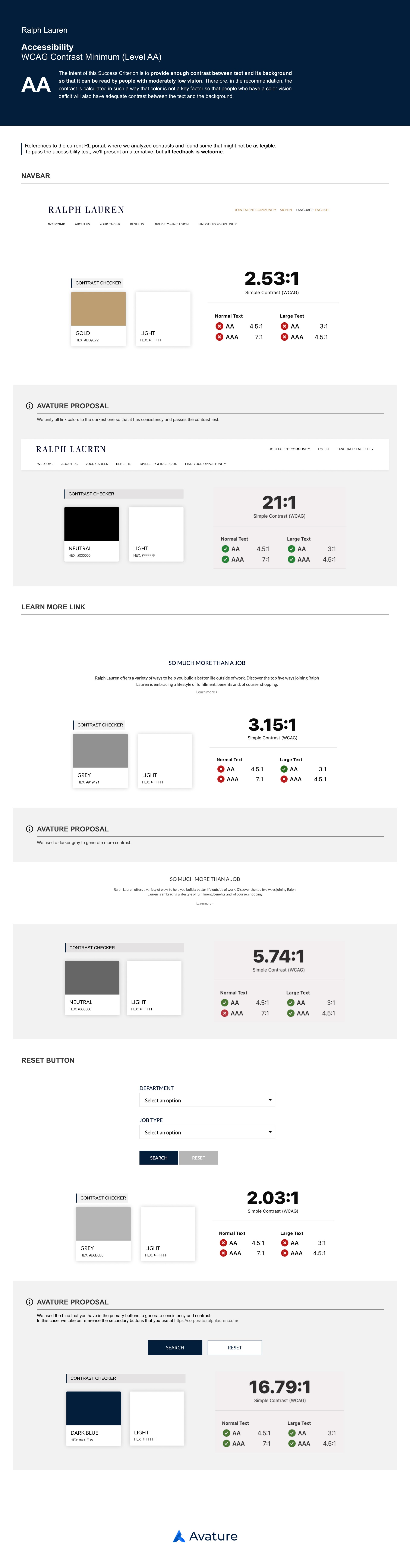
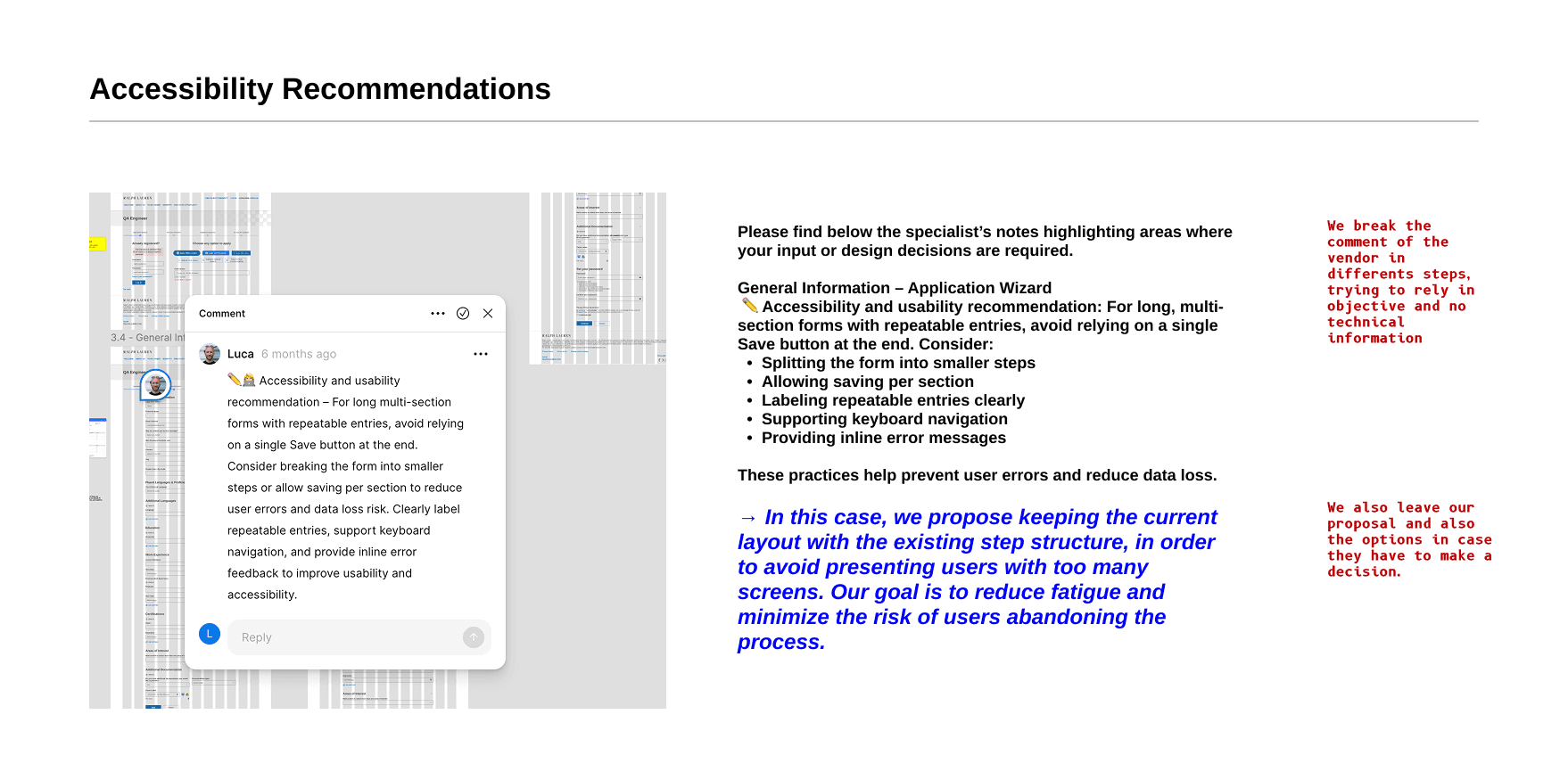
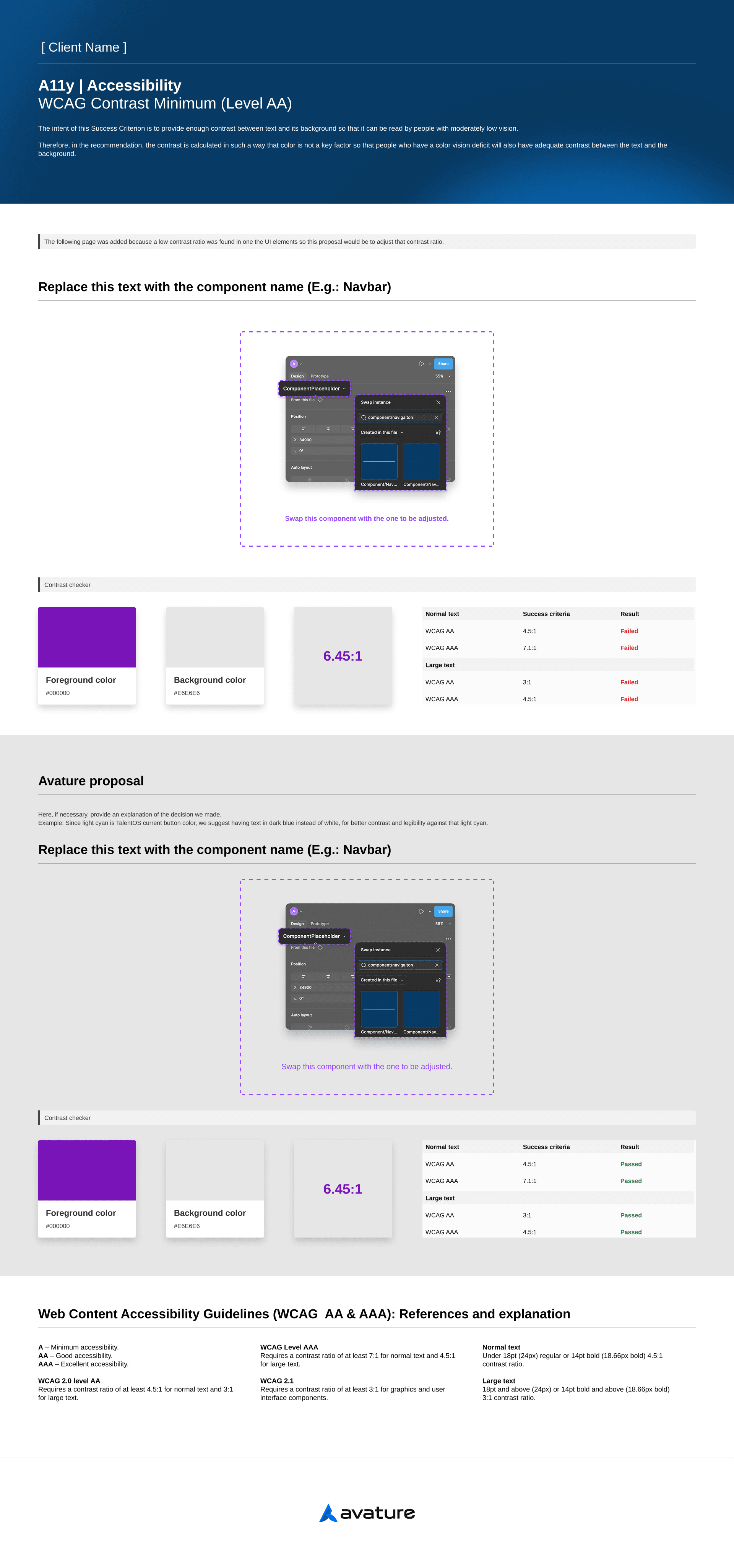
The vendor feedback was highly technical and difficult to translate into concrete design actions. To address this, I created an Accessibility Considerations document, which:
Translated technical recommendations into clear design and interaction implications.
Explained the rationale behind each recommendation.
Made accessibility visible and discussable within the design process.
As a result, it became a shared reference for decision-making, helping teams align on trade-offs between accessibility compliance, design intent, and technical feasibility.
A key learning from this phase was the importance of structured, process-driven documentation to create a shared language across disciplines and reduce ambiguity in complex, constraint-driven projects.
Solution Definition
Accessibility was used as a design driver rather than a checklist, influencing structure, behavior, and system-level decisions.
Key solutions included:
Prioritizing code-based components
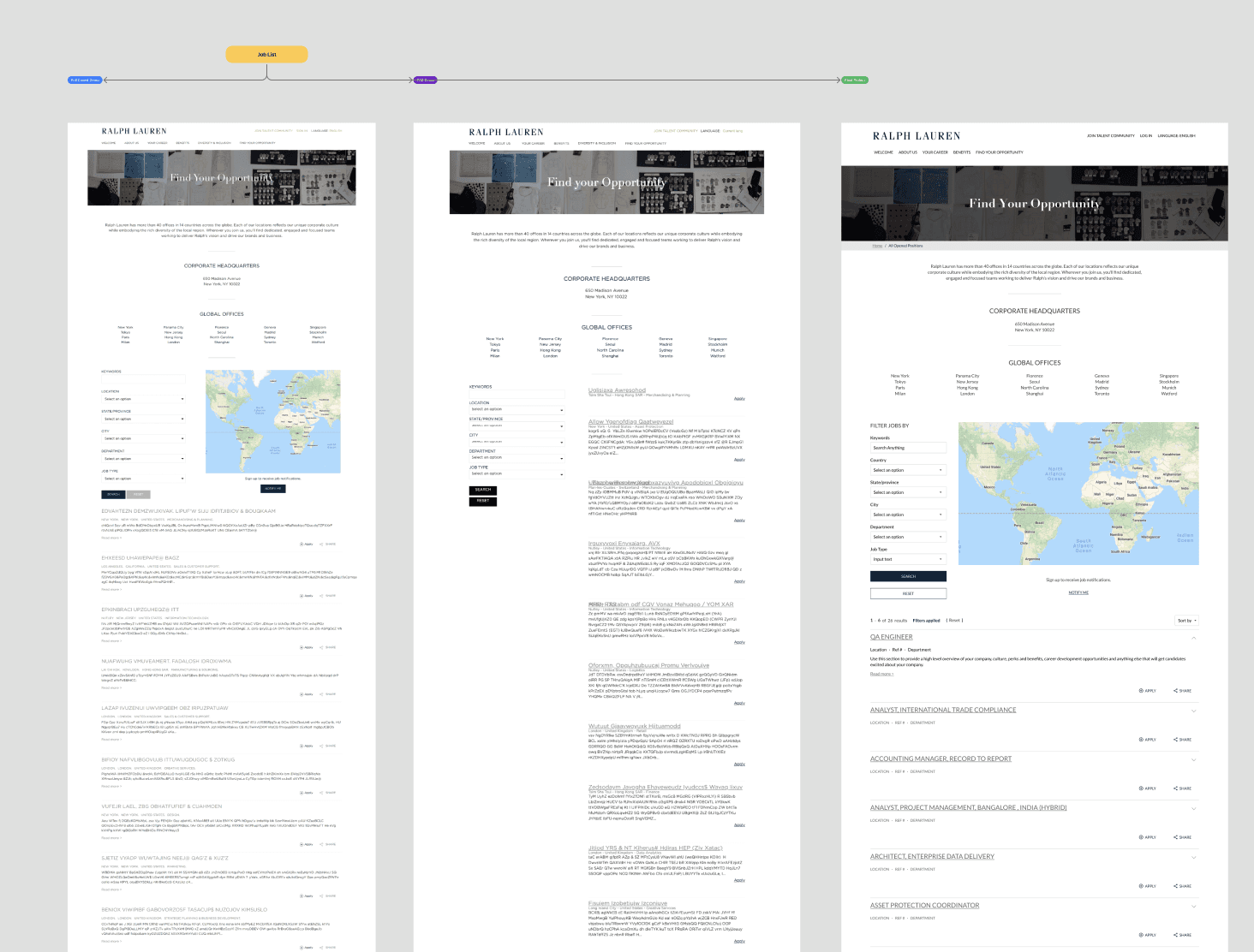
Defining heading hierarchy and landmark structures early in the design process
Designing keyboard-first interaction flows
Ensuring error states, feedback, and system messages were not color-dependent
Reducing cognitive load through simplified flows and clear content prioritization
In parallel, the Accessibility Considerations Document was iterated and abstracted beyond the specific client context, allowing it to evolve into a foundational accessibility framework. This framework could then be integrated into style guides and design systems for future clients, strengthening internal processes and improving accessibility readiness across projects.