Ralph Lauren Careers Revamp
Accesibility, UX, IU, Careers Portal, Design
2025
UX/UI Designer
Context
The Team: We consisted of four members: PM, CO, UX, and Analyst.
As the UX/UI Designer, I moderated workshops, designed the sitemap, developed wireframes and mockups, proposed content structures, and maintained direct client contact to align expectations and address concerns.
Project Type: Professional (Avature)
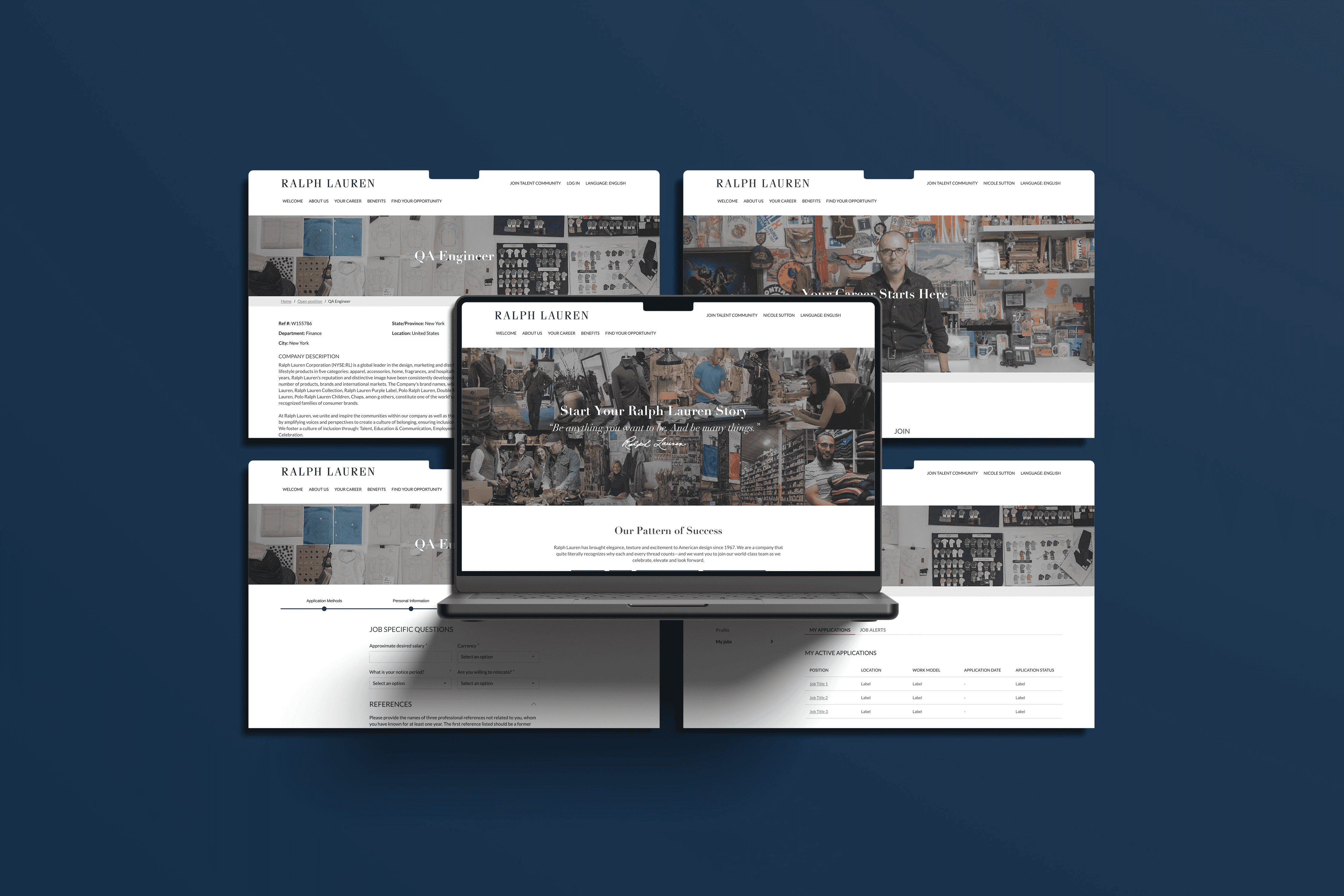
Ralph Lauren needed to revamp its corporate careers portal to improve candidate experience and strengthen its employer brand presence. The project involved rethinking content, application flows, accessibility, and design consistency across multiple sections of the site.
Business Objectives
Reflect the employer brand through a modern, engaging careers portal.
Improve accessibility to meet WCAG standards and reach a wider audience.
Optimize the application flow to reduce drop-offs.
Simplify content maintenance and ensure scalability for future updates.
Key Learning Point
Clear documentation and fast iteration were crucial to align stakeholders, avoid rework, and ensure the final experience was both inclusive and true to Ralph Lauren’s brand identity.
Solution Definition
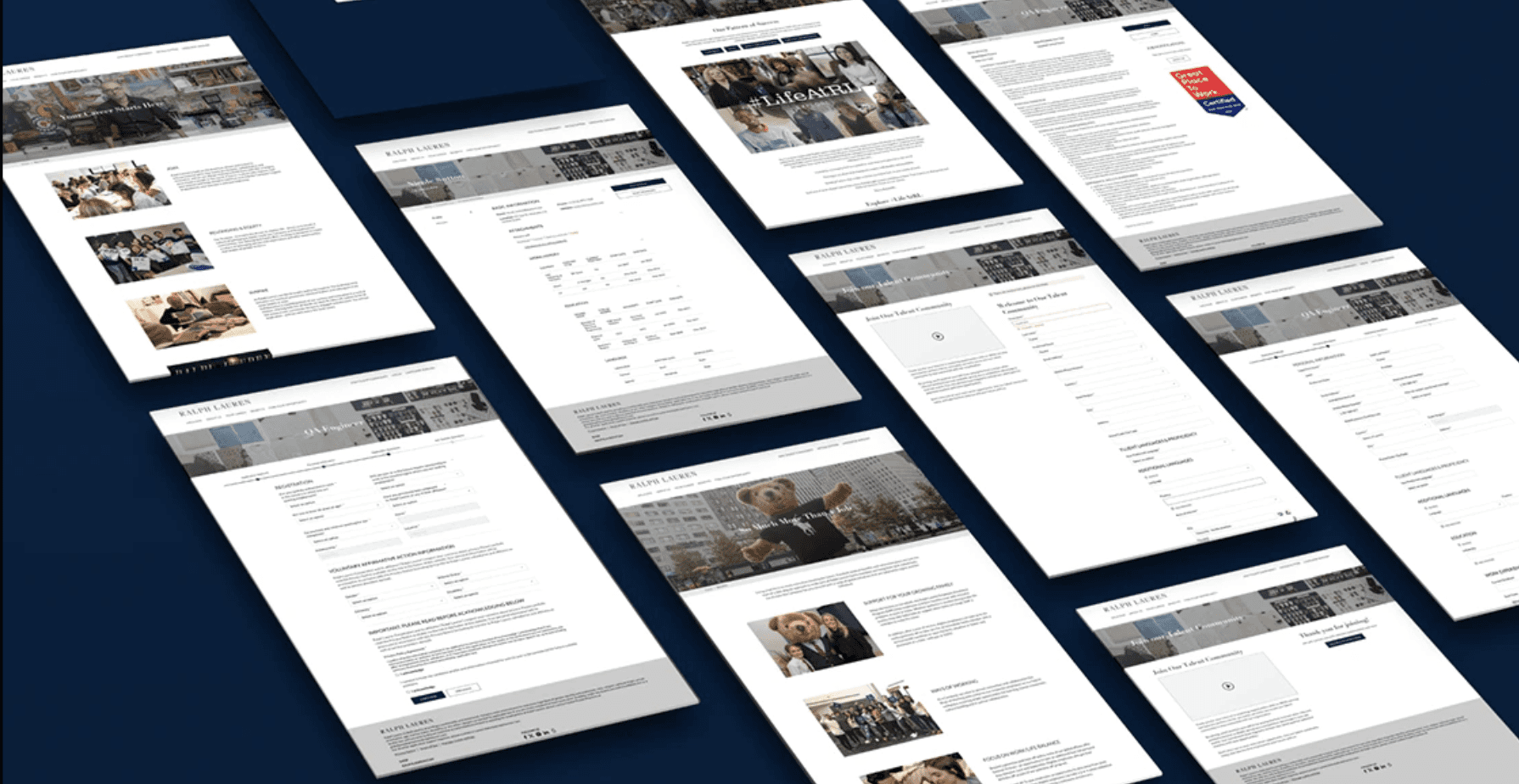
We redesigned the entire portal with a focus on clarity, accessibility, and brand alignment. Our approach combined strong structural planning (wireframes and sitemaps) with an iterative feedback process involving stakeholders at every stage.
How the Solution Works
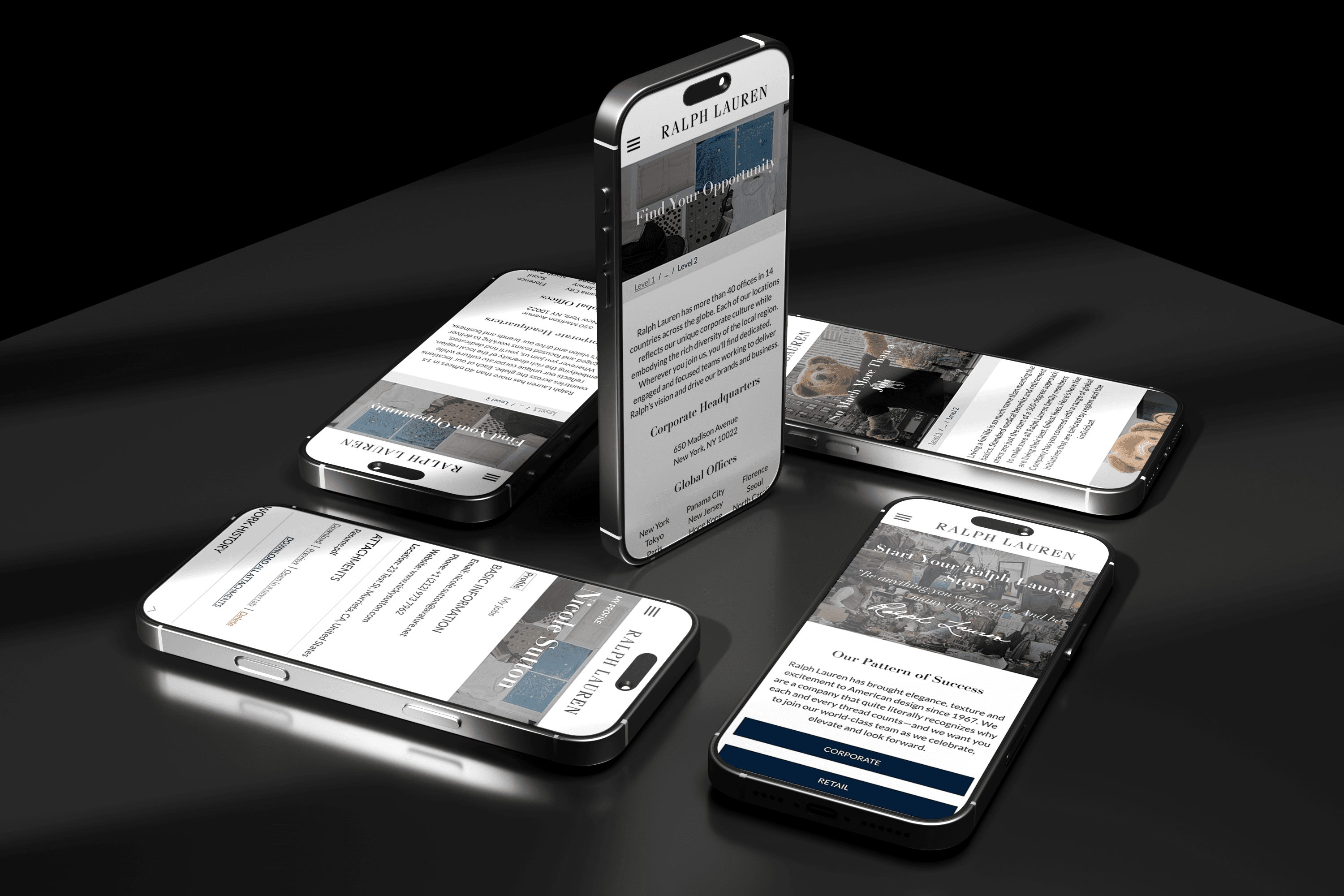
The redesign streamlined navigation through an intuitive sitemap and a simplified end-to-end flow, guiding candidates from job search to application completion. Each step was broken into accessible, visually consistent sections to reduce cognitive load and ensure a seamless, mobile-friendly experience.
A key challenge was balancing accessibility, brand identity, and simplicity in user flows. Careful documentation of findings and continuous validation with stakeholders at every stage minimized rework and guaranteed consistency across a complex, multi-stakeholder project.
Impact
- Higher accessibility compliance: improved contrast, descriptive labels, better navigation.
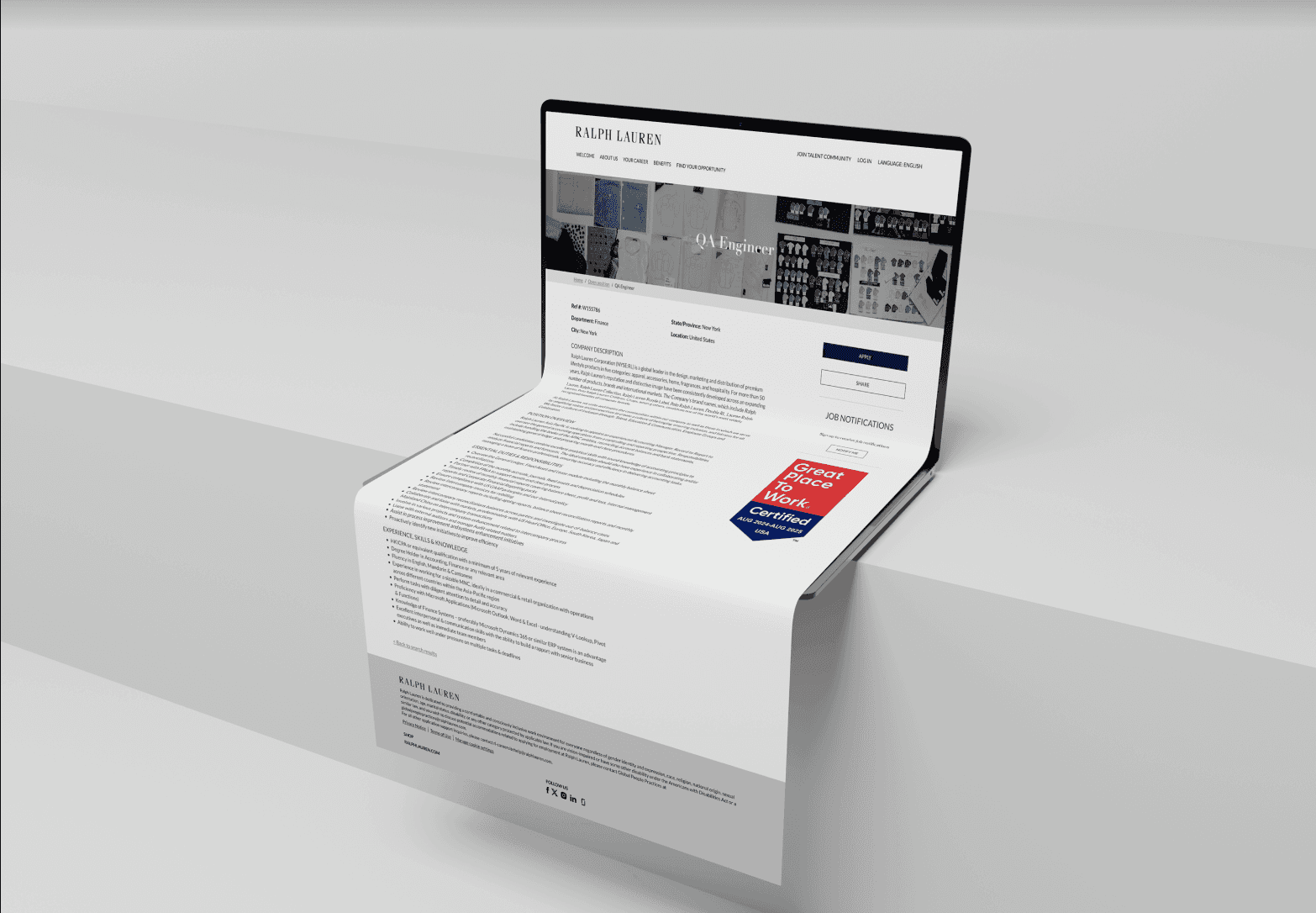
- Optimized application flow: fewer required fields, clearer steps → lower friction.
- Strengthened employer brand: static pages now communicate values, benefits, and culture more effectively.
- Visual and structural consistency: unified style guide applied across all components.
- Stakeholder alignment: all decisions documented and validated through workshops, reducing later conflicts.
Conclusion
This project illustrates how a comprehensive careers portal revamp can act as a bridge between business, brand, and users: more than a visual redesign, it was a strategy to build a clear, accessible, and engaging application experience.
Learnings
Accessibility and branding can coexist, but require negotiation and continuous testing.
Solid wireframes are key: aligning on structure early saved time later. They allowed discussions on structure before moving into visuals.
Documentation matters: Figma annotations and workshop notes kept the project on track and were essential for traceability.
Iterative approach wins: frequent feedback loops helped avoid major rework and kept all teams aligned.